
The difference between generating and creating
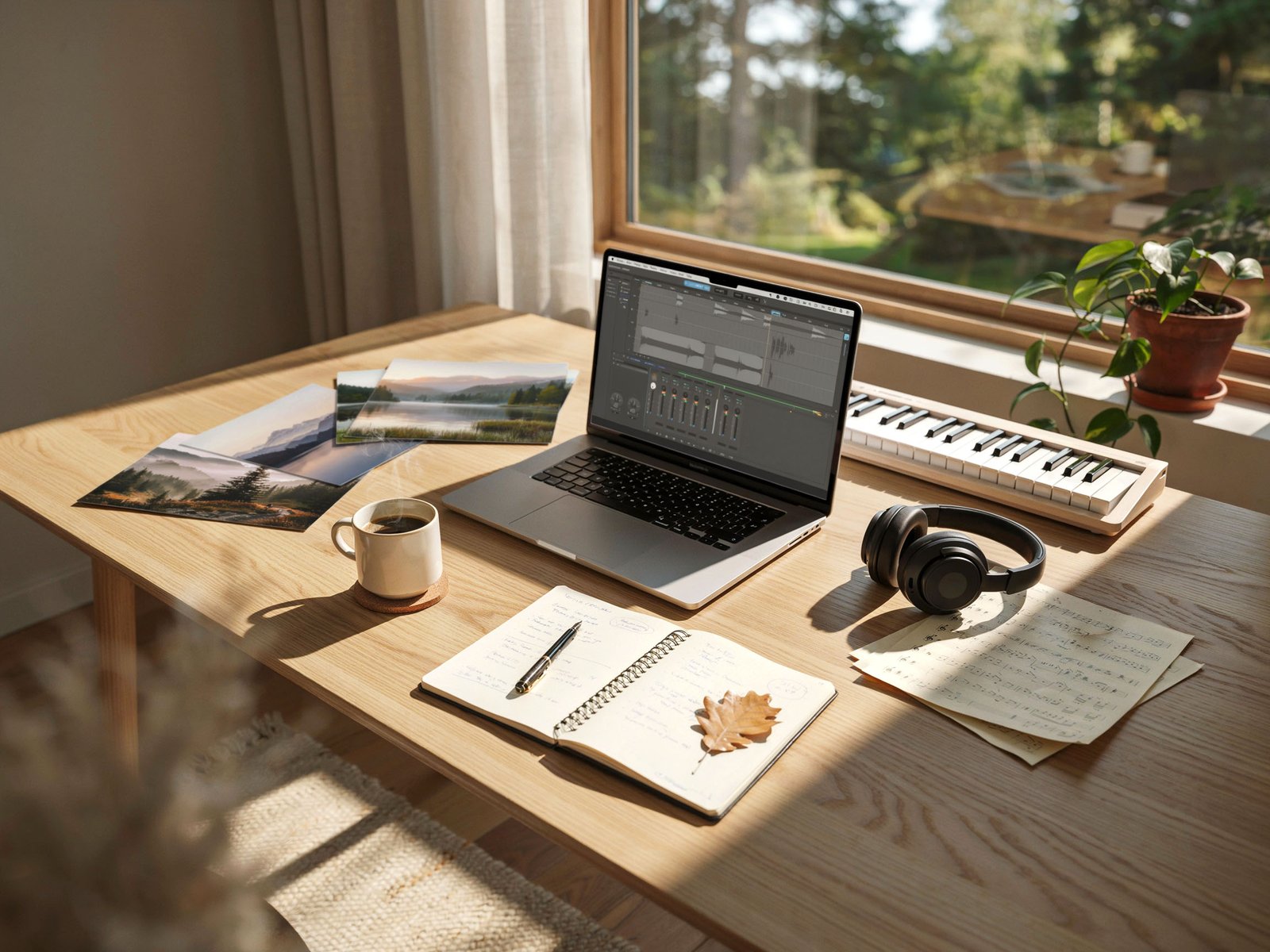
There’s no doubt AI enables us to create content we otherwise couldn’t have made.
But what I find interesting is how few go beyond that. People use AI to generate isolated images or songs, but few go on to build a musical catalogue, a visual identity, a website, and a long-term artistic world.
When people talk about AI-generated art, they often focus on the assets themselves: the image, the piece of music, the text, the video. But just as with composing music using AI, it’s how you connect these pieces that matters.
Take a simple example. An AI can generate a forest image. Another AI can compose a piece of ambient music. A third can write a short article about nature.
Individually, these elements are unrelated. But you can decide that they belong together. The image becomes the visual expression of a feeling, the music its soundtrack, and the article the story that gives them meaning. Together, they create something that none of the individual pieces could express on their own.
That kind of creative direction is difficult to automate because it depends on intent.
The AI doesn’t know why a particular forest matters to me. It doesn’t know that a certain melody reminds me of a childhood memory, or that a blog post was inspired by a conversation I had the week before. It can generate components, but it doesn’t understand the thread that connects them.
The artistic act is often found in selecting, arranging, combining, discarding, refining, and assigning meaning. In that sense, AI has changed the process of creation far more than it has changed the nature of creativity itself.
Leave a Reply